Chinese 12-animal zodiac and Vietnamese Can Chi: differences worth knowing
Both systems share a 12-year cycle and a common origin, yet they diverge at a key point. Understanding the difference helps you avoid confusing or blending them.
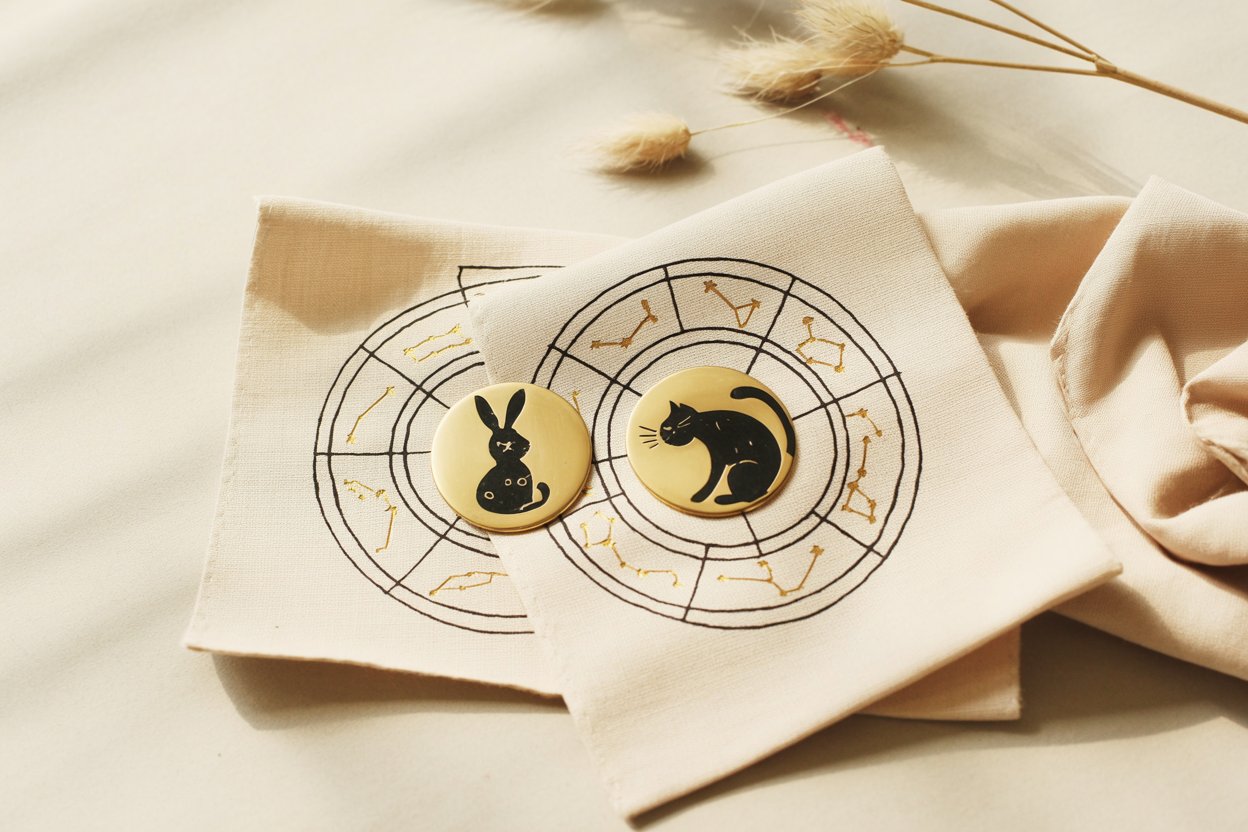
FACT: The Chinese 12-animal zodiac and Vietnamese Can Chi both derive from the same ancient Chinese calendar. Over the centuries, local influences shaped the Vietnamese version, changing one of the twelve animals and some cultural emphases.
Shared foundation: the 12-year cycle
Both systems assign the sign by year of birth (according to the lunar calendar, not the Gregorian January 1). The cycle repeats every 12 years, which means a person born in 1990 shares the same Chinese animal as one born in 2002 or 2014.
Key difference: cat instead of rabbit
FACT: Where the Chinese system speaks of the rabbit (the 4th animal in the cycle), the Vietnamese Can Chi uses the cat. All other animals are identical: rat, ox, tiger, [cat/rabbit], dragon, snake, horse, goat, monkey, rooster, dog, pig.
Why the cat
INTERPRETATION: Explanations are linguistic and cultural. The most common linguistic theory says the old Chinese word for rabbit (mao) sounds very close to the Vietnamese word for cat (meo), which gradually led to the substitution. Other theories point out that the cat is more present and symbolically significant in rural Vietnamese culture than the rabbit.
What this means for the reader
If you were born in a year of the rabbit by the Chinese zodiac (e.g. 1987, 1999, 2011), you are a cat in the Vietnamese Can Chi. The meanings and characterizations of the sign differ slightly between traditions, so it is not appropriate to treat them as equivalent.
Why NumoSpira keeps them separate
RECOMMENDATION: Both systems can be interesting, but each uses its own set of meanings. Mixing them (for example, 'the cat in the Chinese tradition') is not correct, because that category does not exist in the Chinese 12-animal zodiac. On NumoSpira the two systems are presented separately, each with its own description and without translating meanings from one to the other.
What NumoSpira does NOT do
We do not use extended concepts such as harmony triads, the six conflicts (Dui Chong), the San He alliance, or the assignment of elements to animals. These are advanced layers with different interpretations across schools, and we deliberately omit them to prevent misinformation.
Practical conclusion
RECOMMENDATION: If you want to compare, first check your sign in both systems, then read each description separately and notice which aspects fit your experience better. The system closer to you is a meaningful starting point, not the single truth.